1952
Divorced from Bea in January, Mailer begins work on The Deer Park. He takes a studio in the Ovington Building on Fulton Street, Brooklyn (February); moves to a sixth-floor walkup at 41 First Avenue in October (where he installs his own plumbing); meets Gore Vidal; and makes the first of many annual autumn visits to Mexico to see Susan, stopping in Arkansas to see Fig Gwaltney. On 26 March he debates Dwight Macdonald at Mt. Holyoke College — "I Cannot Choose" versus Macdonald's "I Choose the West." The year sees Mailer's first contribution to Partisan Review (52.1) and the first two of five short stories he will publish in 1952–53 (52.2, 52.3).
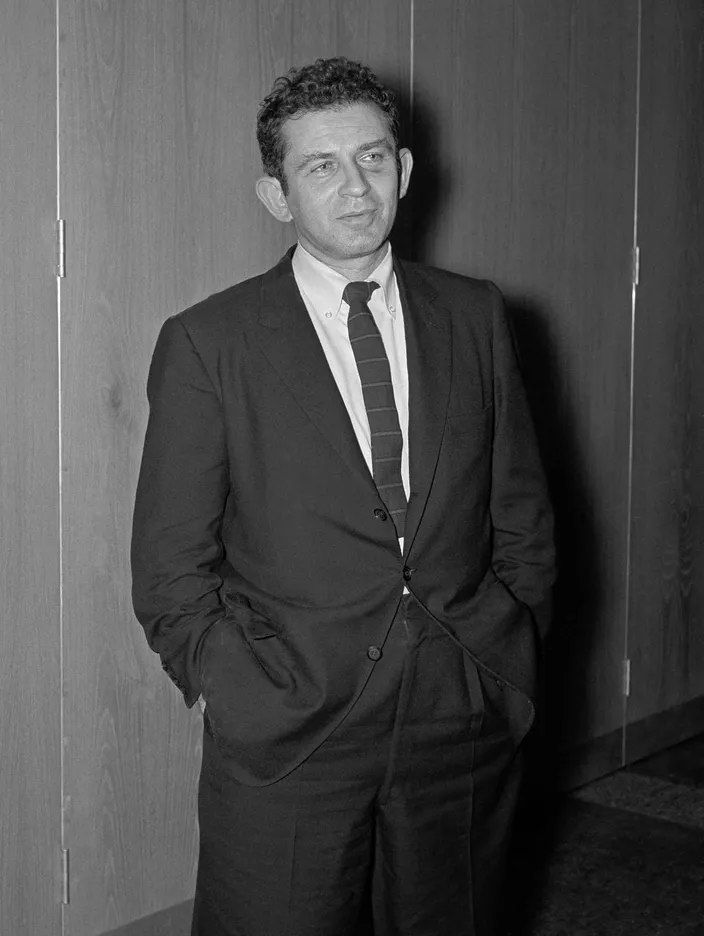
January — divorce
Mailer and Bea divorce in January. He begins work on The Deer Park, the novel based on his June 1951 Palm Springs trip with Mickey Knox.
February — the Ovington Building
In February Mailer rents a studio in the Ovington Building on Fulton Street, Brooklyn — the same building in which Col. Rudolf Abel, the Soviet spy later exchanged for U-2 pilot Francis Gary Powers in 1962, has an office.
March — the Mt. Holyoke debate
26 March — Mailer and Dwight Macdonald debate at Mt. Holyoke College, South Hadley, Massachusetts, on the question “The U.S.A. or the USSR.” Macdonald’s speech, “I Choose the West,” is later reprinted in his collection Memoirs of a Revolutionist (Farrar, Straus and Cudahy, 1957). Mailer’s speech, “I Cannot Choose,” has never been reprinted or located. Mailer argues that while Western civilization is broadly superior at the moment, the U.S. is backsliding into a war economy, and Europe faces the prospect either of alignment with the USSR or of conquest by it — with consequences including “a lowering of the standard of living in the U.S., perhaps Nazi-like concentration camps for dissenters, and a general breakdown of moral values.” “The independent spirit of non-conformity that the U.S. has founded is dying out,” he concluded.
27 March — Unsigned “Authors Debate U.S., USSR Issues at Mt. Holyoke” (52.0) reports the debate in the Springfield Union.
May–June — Partisan Review
Mailer’s first contribution to Partisan Review — “Our Country and Our Culture: A Symposium” (52.1), 19 (May–June), 298–301 — appears. Twenty-five American writers — among them Louise Bogan, Leslie Fiedler, Irving Howe, Margaret Mead, C. Wright Mills, William Phillips, Philip Rahv, David Riesman, and Lionel Trilling — wrestle with four questions on “the ‘new’ and more positive relationship between American writers and intellectuals and mass democratic culture.” Mailer declares that he is “in almost total disagreement with the assumptions of this symposium,” arguing instead for “the efficacy of alienation and opposition to current society, rather than … a strapping participation in the vigors of American life”.
October — 41 First Avenue; annual Mexico trips begin
In October Mailer moves to a sixth-floor walkup at 41 First Avenue, where he installs his own plumbing. In the same month he meets Gore Vidal in New York — the start of the decades-long literary rivalry that will peak on Dick Cavett’s show in December 1971.
Fall — Mexico and Arkansas
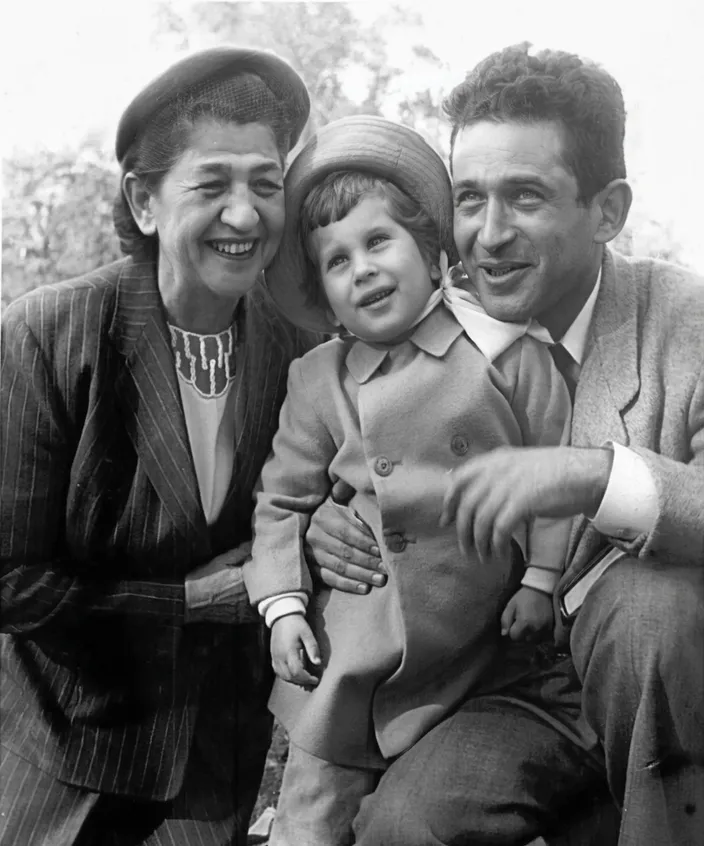
In the fall Mailer makes the first of his many annual visits to Mexico to see Susan (now three), stopping in Arkansas on the way to see “Fig” Gwaltney, his wartime friend and correspondent. He begins writing short stories in earnest and will publish five in 1952–53.
November and December — the first two stories
November — “The Paper House” (52.2), a story set in occupied Japan drawn from Mailer’s Army experience there in 1946, appears in New World Writing: Second Mentor Collection, pp. 58–69 (New York: New American Library, softcover). Dedicated to Vance Bourjaily, “who told me the anecdote on which the story is based”.
December — “The Dead Gook” (52.3) appears in Discovery, No. 1, ed. John W. Aldridge and Vance Bourjaily, 56–76 (New York: Pocket Books, softcover) — a story about a jungle patrol with partisans in the Philippines.
Mailer’s later comment on 52.2 and 52.3, in the “advertisement” that precedes them in Advertisements for Myself (59.13): he has “no great pride in them, because they are respectable. They make no attempt to raise the house an inch or two.”
The circle in one photograph
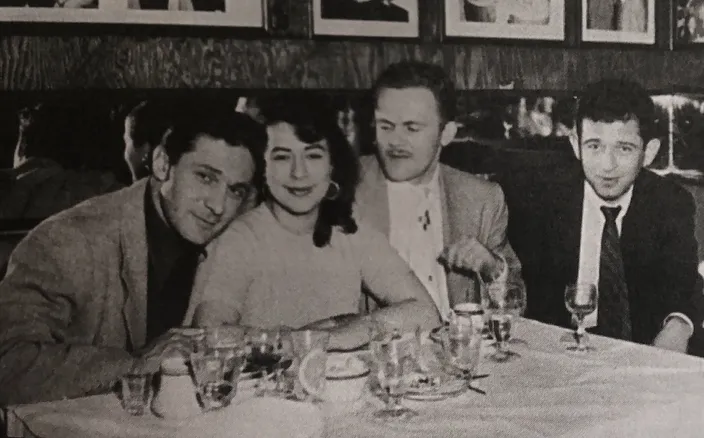
The photograph above captures the core of Mailer’s early-1950s circle: Mickey Knox (actor, Deer Park confederate), Adele Morales (partner from 1951; wife from 1954), James Jones (fellow postwar novelist), and Norman.
Related pages
- 1951 | 1953
- Authors Debate U.S., USSR Issues at Mt. Holyoke | Our Country and Our Culture: A Symposium | The Paper House | The Dead Gook
- Adele Morales | Gore Vidal | Beatrice Silverman | Susan Mailer | Dwight Macdonald | Vance Bourjaily | John W. Aldridge | Francis Irby "Fig" Gwaltney
- Partisan Review | Esquire
- Advertisements for Myself (59.13)