Introduction to In the Belly of the Beast
Mailer's introduction to Jack Henry Abbott's In the Belly of the Beast, first printed as "Discovering Jack H. Abbott" in the New York Review of Books (11 June 1981, titled "A Vision of Hell" on the cover) and then, with minor changes, as the introduction to the Random House book in late June. Mailer's championing of Abbott - and the parole it helped secure - ended six weeks later in the killing of Richard Adan.
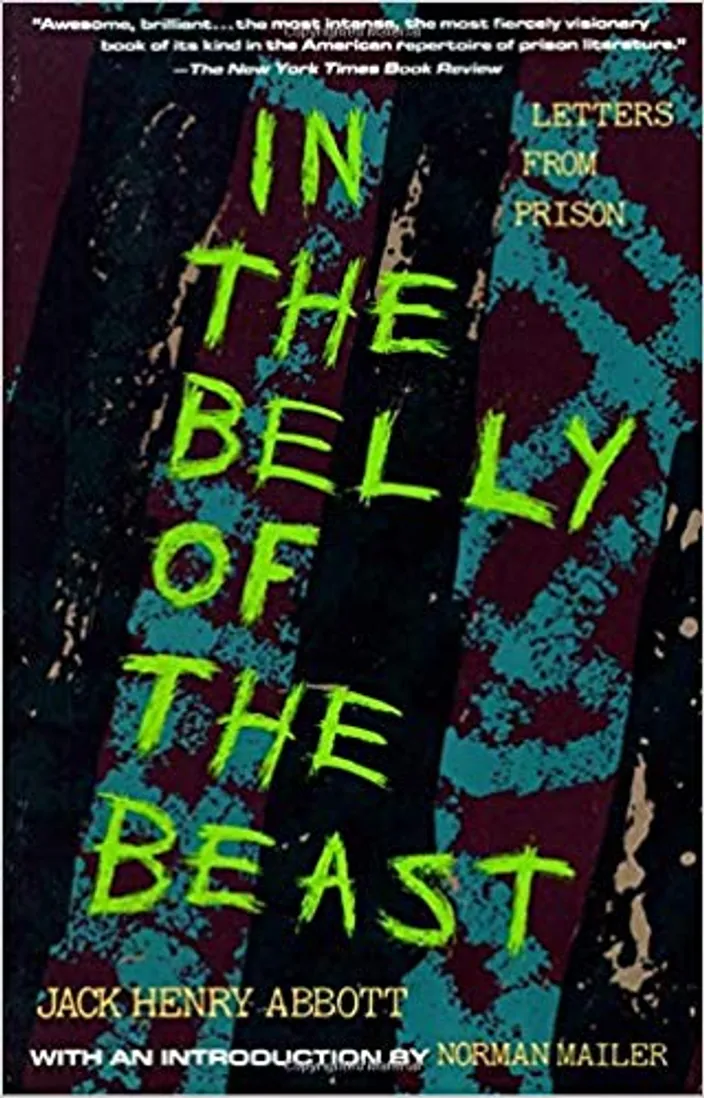
Mailer’s introduction to In the Belly of the Beast: Letters from Prison, the collected prison writing of the convict Jack Henry Abbott. It appeared first as “Discovering Jack H. Abbott” in the New York Review of Books (11 June 1981) — billed “A Vision of Hell” on the cover, and printed alongside two of Abbott’s own notes, “On Women” and “On Nature” — and then, with a few very minor changes, as the introduction to the Random House volume published in late June. It is reprinted in Mind of an Outlaw (13.1; see also 13.2, 551–66). A full transcription (rights cleared) is held at full text.
This page also serves as the hub for the Abbott affair of 1981, which the year’s coverage entries report from many angles (see Related coverage below).
The correspondence
Abbott first wrote to Mailer in the middle of his work on The Executioner’s Song (79.14), the letter forwarded by the literary agent Morton Janklow. Having read that Mailer was writing about Gary Gilmore and violence in America, Abbott offered a warning and an instruction: that almost no writer understood violence in prisons, that it took a decade behind bars before the knowledge “permeated your psychology and your flesh,” and that he could clarify what Gilmore’s life as a convict had really been. Mailer — who, by his own admission, “did not know much about violence in prisons” — took him up. The letters that came back were, he said, “intense, direct, unadorned, and detached,” and within two weeks he was in the middle of a thoroughgoing correspondence with a writer who “had his own voice. I had heard no other like it.” Abbott, he wrote, “wrote like a devil,” with an eye for the continuation of a thought “like the line a racing-car driver takes around a turn.”
The argument
The introduction turns Abbott’s letters into an argument about American penology. Where Gilmore had been a “romantic and a mystic” who saw incarceration as a kind of karma, Abbott emerged as “an intellectual, a radical, a potential leader,” a self-made Marxist who had read Bohr, Hegel, Russell, Whitehead, Carnap, and Quine in Maximum Security and “torn the meat of culture with his fingers.” Out of that reading Mailer draws the book’s central, characteristic paradox: that prison takes “not only the worst of the young … but the best — that is, the proudest, the bravest, the most daring,” and is “equipped to grind down criminals who are cowards into social submission, but can only break the spirit of brave men who are criminals, or anneal them until they are harder than the steel that encloses them.” The penitentiary, for Mailer, is the burning lens in which a society “drenched in bad conscience” comes to focus: “we won’t get law and order without a revolution in the prison system.”
Mailer is candid about the limits of his enthusiasm — “I am much more impressed by the literary measure of Abbott’s writings on prison than by his overall analyses of foreign affairs and revolution” — and candid, too, about the wager he is making. Writing in March 1981, with Abbott’s parole apparently imminent, he closes: “if he gets out, we may yet have a new writer of the largest stature among us. … I love Jack Abbott for surviving and for having learned to write as well as he does.”
Aftermath
Abbott was paroled that June, partly on the strength of letters from Mailer and others in the literary community attesting to his gift. Six weeks later, in the early morning of 18 July 1981, he stabbed and killed Richard Adan, a 22-year-old actor and waiter, outside a Manhattan restaurant. The sponsorship that this introduction had crowned became the occasion of Mailer’s fiercest public criticism; he attended Abbott’s 1982 trial and called the whole thing “a tragedy all around.” The episode is narrated on the 1981 and Jack Henry Abbott pages.
1982 — the trial
Abbott’s murder trial ran in January 1982 and produced a fresh wave of coverage, nearly all of it turning on Mailer’s testimony and his press-conference statements of responsibility. Mailer testified on 19 January (82.2); pressed on whether he felt remorse, he answered, “I can’t give you my blood, but you can have my psychic blood.” Across the press conferences he accepted “partial responsibility” and a “very large responsibility for the death of Richard Adan” (82.3, 82.4, 82.5, 82.7, 82.10), telling reporters the victim’s family had “an absolute right to hate and revile me.” On 22 January Abbott was convicted of first-degree manslaughter — “It’s a fair verdict,” Mailer said (82.6) — and on 16 April he was sentenced to fifteen years to life (82.11, 82.12). The 1982 trial reports (82.1, 82.2, 82.3, 82.4, 82.5, 82.6, 82.7, 82.8, 82.10, 82.11, 82.12) are gathered as rows in the 1982 bibliography, pointing here.
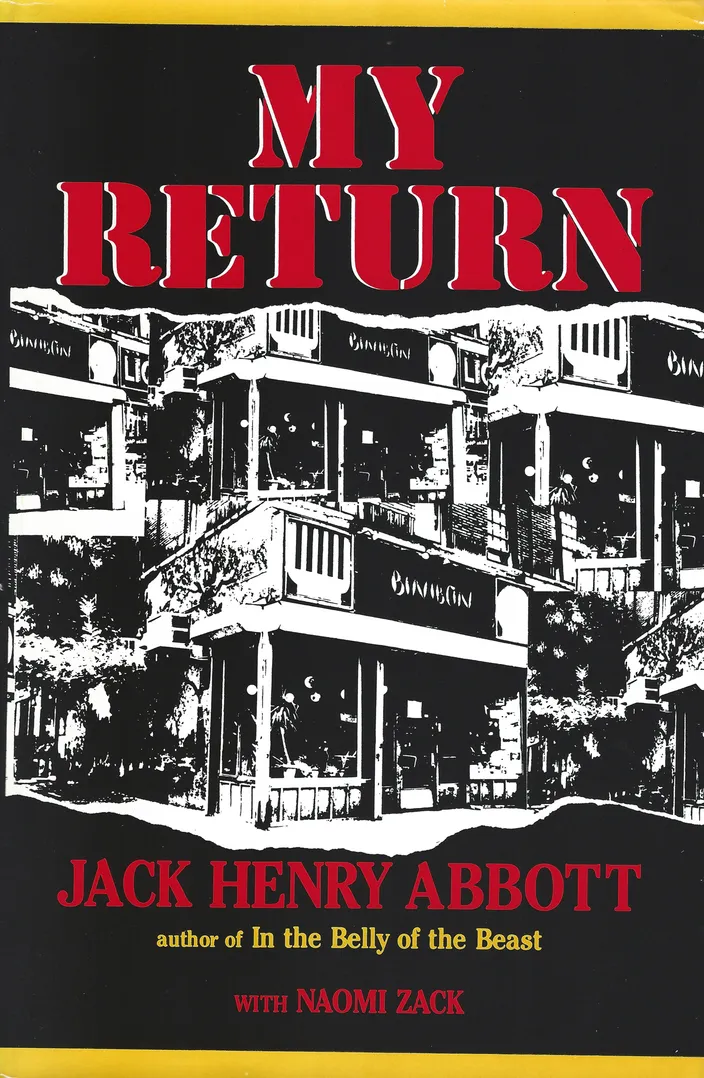
Related coverage (1981)
The book’s appearance and Abbott’s parole were widely reported, generally quoting Mailer: Stella Dong’s Publishers Weekly article-interview (81.11), Mary Vespa’s People article (81.12), M. A. Farber’s front-page New York Times report after the killing (81.13), and Mailer’s own letter to the Soho News answering John Lombardi (81.14) — all gathered in the year’s bibliography. Abbott’s prose had first reached the public in Mailer’s NYRB note “In Prison” (80.9) the year before.
Related pages
- Jack Henry Abbott | Richard Adan | In Prison (80.9)
- The Executioner’s Song (79.14) | Random House | 1981
- The Mind of an Outlaw: Selected Essays of Norman Mailer (13.1) | Norman Mailer: A Double Life (13.2)