1974
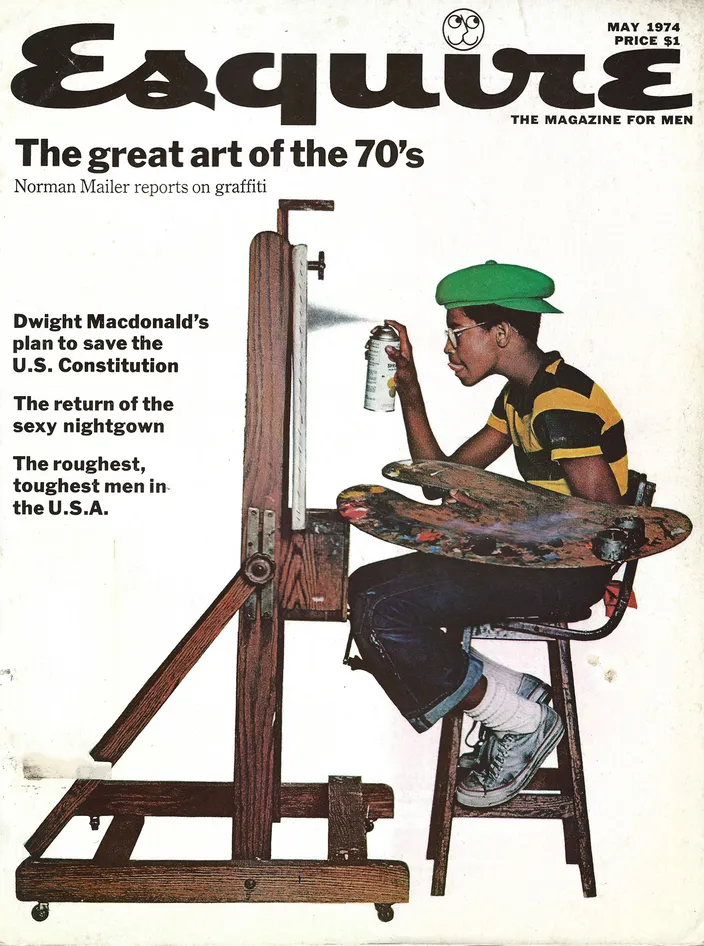
A quieter, between-books year. Jack Gelber's stage adaptation of Barbary Shore runs in January; in May Mailer publishes The Faith of Graffiti, his essay on New York's graffiti writers, simultaneously in Esquire and as a book with Lawrence Schiller and the photographers Mervyn Kurlansky and Jon Naar. He pays a warm debt to his old mentor Jean Malaquais with a preface to The Joker, and keeps deflecting questions about the long Egyptian novel he is slowly writing.

January — Barbary Shore on stage
Jack Gelber’s dramatic adaptation of Barbary Shore (51.1) ran in New York from 10 to 27 January. Mailer opened the year deflecting questions about the long novel in progress — Ancient Evenings (83.18) — telling the New York Times, asked for a New Year’s resolution, “To work on a novel … . Just those five words” (74.1). Frank Crowther’s two-part Changes interview concluded (74.3).
Spring — the Fifth Estate and graffiti
In March the Fifth Estate merged with CAR-IC into the body that would publish Counter-Spy magazine (74.6). The Edward MacDowell Medal speech excerpts appeared in the Colony’s annual report (74.7).
7 May — Praeger published The Faith of Graffiti (74.9), Mailer’s essay on New York’s graffiti writers — his text, Lawrence Schiller-prepared, with photographs by Mervyn Kurlansky and Jon Naar (UK title Watching My Name Go By). The essay ran the same month in Esquire (74.8) as its cover story.
Watergate ran underneath the spring: Mailer gave the longest comment in the New Yorker’s symposium on the Nixon tapes, calling the President “the stubbornest man in America” (74.11), and answered the “expletive deleted” transcripts with his own imagined transcripts of Johnson, Kennedy, and Truman (74.13). Roger Ebert pressed him on the “big one” (74.10).
Fall — Malaquais, Hemingway, and an old story
In September, the Warner “Rediscovery Series” reissued Jean Malaquais‘s novel The Joker with Mailer’s affectionate preface (74.14) to the friend and mentor who had translated The Naked and the Dead into French and to whom Barbary Shore is dedicated. Mailer endorsed Senator Jacob Javits (74.15), published the poem “Gladiators: For Hemingway” (74.16), and named The Time of Her Time his own best story for Rust Hills’s anthology (74.19).
Related pages
- 1973 | 1975
- The Faith of Graffiti (74.9) | Preface to The Joker (74.14)
- The Fifth Estate | Lawrence Schiller | Jean Malaquais
- Barbary Shore (51.1) | Ancient Evenings (83.18) | The Rich, Famous, Talented and Powerful Resolve... (74.1) | Frank Crowther: Norman Mailer, Part II (74.3) | Mailer Headlines Counter-Spy Pitch (74.6) | Excerpts from Acceptance Speech (MacDowell Colony Report for 1973) (74.7) | The Faith of Graffiti (Esquire) (74.8) | The Talk of the Town: Notes and Comments (74.11) | Expletive Restored (74.13) | Is He Writing the Big One? (74.10) | Norman on Senator [Jacob] Javits (74.15) | Gladiators: For Hemingway (74.16) | Norman Mailer: 'The Time of Her Time' (74.19)
Referenced by 26
Works
- A Section of an Interview between Norman Mailer and David Young
- Excerpts from Acceptance Speech (MacDowell Colony Report for 1973)
- Expletive Restored
- Frank Crowther: Norman Mailer, Part II
- Gladiators: For Hemingway
- Is He Writing the Big One?
- Mailer Headlines Counter-Spy Pitch
- Mailer: I'm Sorry about the 'Marilyn' Book
- Norman Mailer (in Tongues of Fallen Angels)
- Norman Mailer on Science and Art
- Norman Mailer: 'The Time of Her Time'
- Norman on Senator [Jacob] Javits
- Preface to The Joker (My Friend, Jean Malaquais)
- Some Notables Name Their Bests
- The Faith of Graffiti
- The Faith of Graffiti (Esquire)
- The Rich, Famous, Talented and Powerful Resolve...
- The Talk of the Town: Notes and Comments