1973
Mailer turns fifty on 5 February and announces 'The Fifth Estate' at a notorious Four Seasons party; the Watergate break-in that June lends the idea a retrospective prescience. In August he publishes Marilyn: A Biography, a 400,000-copy bestseller attended by a plagiarism dispute and his public claim that Monroe may have been murdered, and receives the Edward MacDowell Medal at Peterborough. He spends the fall on a long Marilyn book tour.
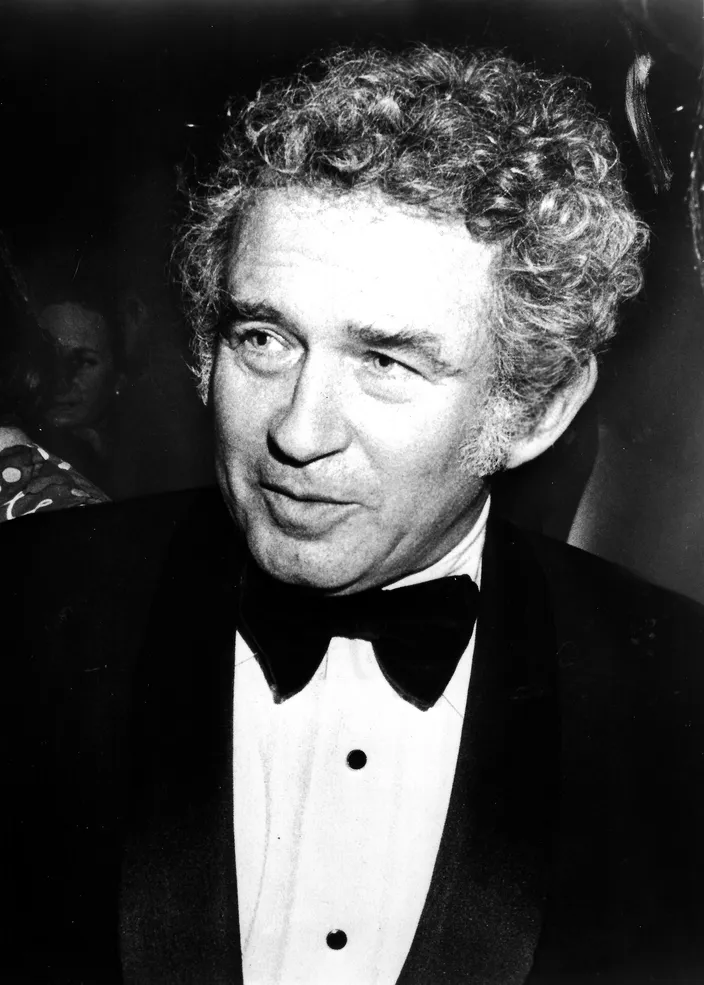
January — the Statendam
Mailer opened the year still at sea, returning from the S.S. Statendam symposium tied to the launch of Apollo 17; his shipboard remarks were edited into “What Apollo Has Meant to Mankind” (73.1) in the Christian Science Monitor.
February — fifty, and the Fifth Estate
5 February — On his fiftieth birthday Mailer hosted a six-hundred-guest party at the Four Seasons, charging $50 a couple and promising “an announcement of national importance (major).” The announcement was The Fifth Estate, a proposed citizen watchdog organization — a “democratic secret police” to investigate the FBI and CIA. The bourbon-fueled speech was widely judged a misfire, and he spent the next day walking it back at a news conference. The party and its coverage became a small genre of its own (73.2–73.8, 73.11, 73.18). When the Watergate break-in surfaced that June, several reporters conceded Mailer had been prescient; he took up the theme in “The Morning After” (73.10).
Spring — Last Tango and the reunion
In May Mailer published “A Transit to Narcissus” (73.12), his review of Bertolucci’s Last Tango in Paris. In June he attended his Harvard thirtieth class reunion (73.13).
Summer — Marilyn
1 August — Grosset and Dunlap published Marilyn: A Biography (73.30), produced by Lawrence Schiller: a 95,000-word “novel biography” of Marilyn Monroe grown from a planned photo preface. It became a bestseller (400,000 copies) and Mailer’s first full-length life-study. Two storms followed — a plagiarism dispute with the prior Monroe biographers Maurice Zolotow and Fred Lawrence Guiles (settled out of court), and Mailer’s 18 July press-conference claim that Monroe’s death warranted investigation as a possible murder, which drew a contentious 60 Minutes exchange with Mike Wallace. Time put Mailer and Monroe on its cover (73.20); Pauline Kael called the book “A Rip-Off with Genius.”
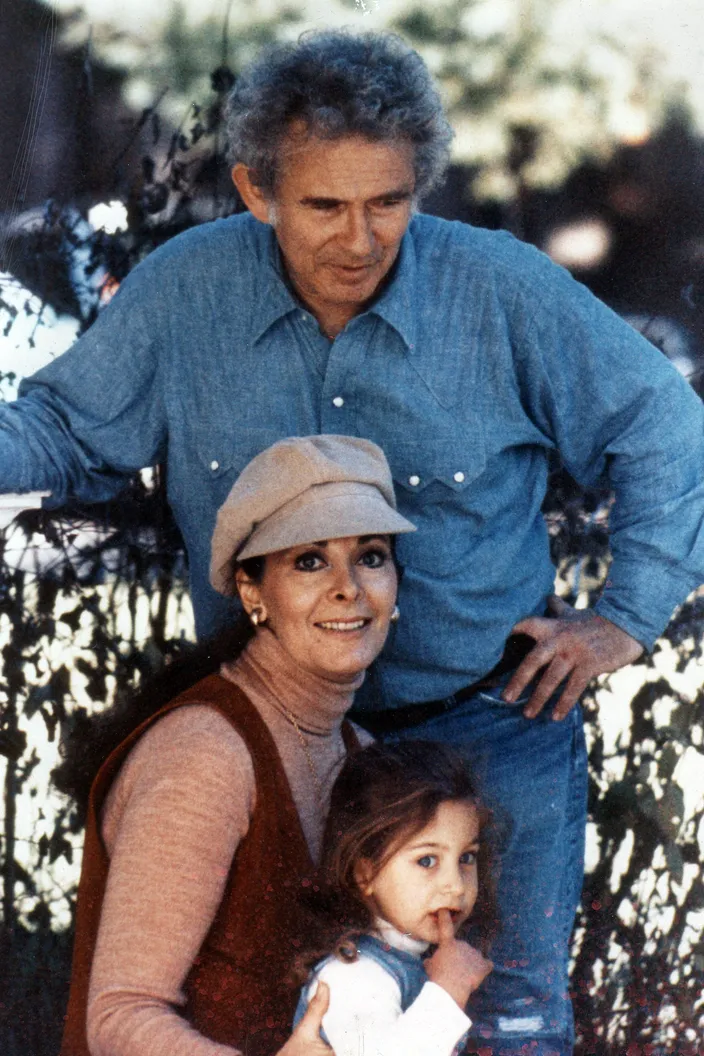
18 August — At the MacDowell Colony in Peterborough, New Hampshire, Mailer received the Edward MacDowell Medal (73.35), presented by John Leonard with remarks by George Plimpton.
Fall — the book tour
Mailer spent the autumn promoting Marilyn across the country and in Britain — press conferences, campus readings, and television, gathered as bibliography rows under the book (73.31–73.46), including Buzz Farbar‘s long Viva interview “Mailer on Marriage and Women” (73.40) and his “longest and best” Marilyn interview, with Melvyn Bragg for the BBC (73.46). The year also saw the reprinting of a one-page fragment of his boyhood space adventure, “A Mystery” (73.47) — the earliest Mailer fiction in print.
Related pages
- 1972 | 1974
- Marilyn: A Biography (73.30) | The Fifth Estate party | The Fifth Estate
- Marilyn Monroe | Lawrence Schiller | The MacDowell Colony
- What Apollo Has Meant to Mankind (73.1) | The Morning After (73.10) | A Transit to Narcissus (73.12) | Class of '43 — Waiting for Mailer (73.13) | Two Myths Converge: NM Discovers MM (73.20) | Mailer Enjoys a Day in the Sun at MacDowell Colony (73.35) | Norman Mailer Talks to Melvyn Bragg about... Marilyn Monroe (73.46) | Mailer on Marriage and Women (73.40) | A Mystery (from The Martian Invasion) (73.47)
Referenced by 37
Works
- A Conversation with Norman Mailer
- A Mystery (from The Martian Invasion)
- A Transit to Narcissus
- Advertisement for Marilyn: A Biography
- Chasing the Great White Whale: Norman Mailer, Part I
- Class of '43 — Waiting for Mailer
- Mailer Enjoys a Day in the Sun at MacDowell Colony
- Mailer on Mailer: An Interview
- Mailer on Marriage and Women
- Mailer's Maidstone: Where's the Reality?
- Marilyn (Ladies' Home Journal, August 1973)
- Marilyn (Ladies' Home Journal, July 1973)
- Marilyn Monroe's Sudden Death
- Marilyn: A Biography
- Married to Marilyn
- Norman Mailer Talks to Melvyn Bragg about... Marilyn Monroe
- The Fifth Estate Birthday Party
- The Jewish Princess
- The Morning After
- Two Myths Converge: NM Discovers MM
- Untitled interview (Brushfire)
- What Apollo Has Meant to Mankind
- Writer as Something Else