Barbary Shore
Mailer's second novel — a short, claustrophobic political allegory set in a Brooklyn Heights boarding house, drafted across New York, Provincetown, Hollywood, and Putney, Vermont over 1949–1950, and published by Rinehart on 24 May 1951. Dedicated to Jean Malaquais. Reviews are almost uniformly negative; the book ends Mailer's postwar honeymoon with American critics and fuels the self-reappraisal that will surface in Advertisements for Myself.
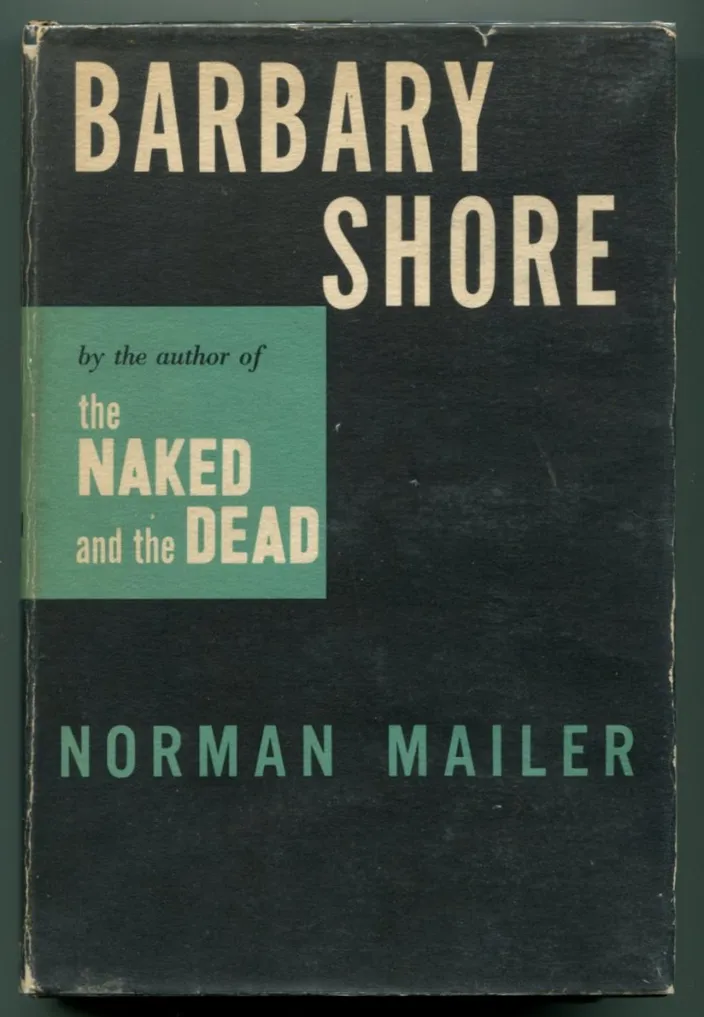
Barbary Shore. New York: Rinehart, 24 May 1951; London: Cape, 21 January 1952. Novel, 312 pp., $3.00.
Dedication: “To Jean Malaquais.”
The 1971 Cape hardcover edition and the 1973 softcover Panther edition (a Cape imprint) contain a “Note from the Author” consisting of “Second Advertisement for Myself: Barbary Shore” from Advertisements for Myself (59.13), minus the final sentence, with one other small change.
A dramatic version was presented at the New York Shakespeare Festival Public Theater, 10–27 January 1974. Jack Gelber wrote and directed the adaptation, which has never been published.
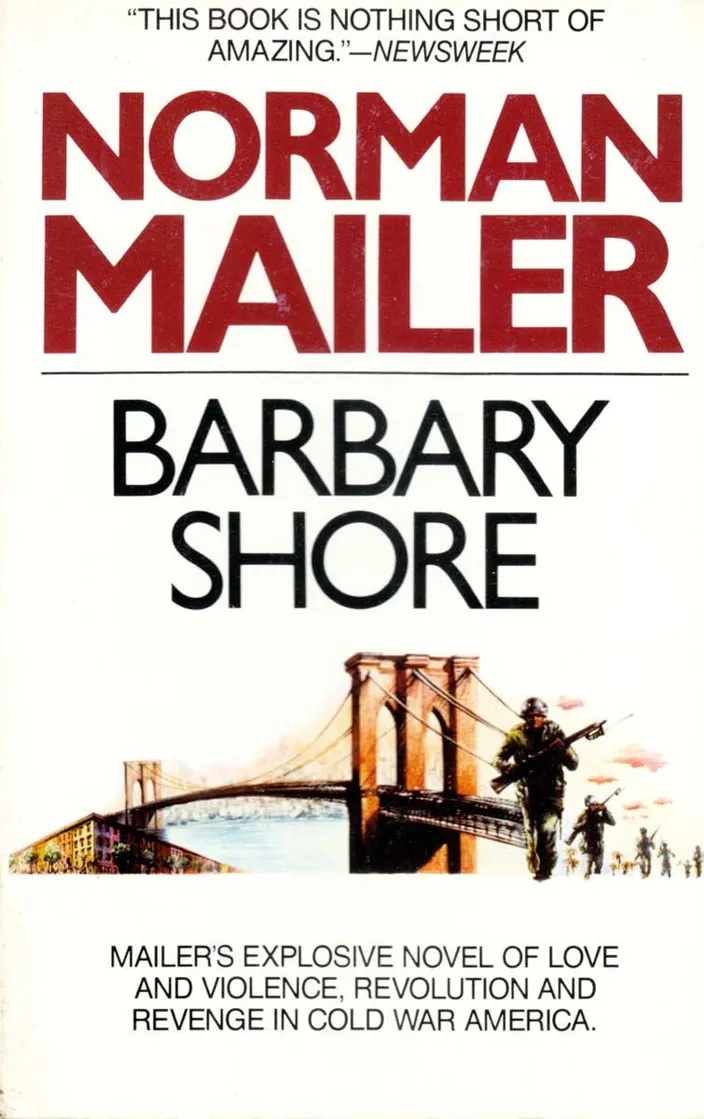
Rpt: 59.13 (eight brief excerpts from the novel, nine pages total); 98.7 (partial, in The Time of Our Time).
Composition — the Trotskyist drift
Mailer’s own description, in the Steven Marcus interview 64.1:
I started Barbary Shore as some sort of fellow-traveler, and finished with a political position which was a far-flung mutation of Trotskyism. And the drafts of the book reflected these ideological changes so drastically that the last draft of Barbary Shore is a different novel altogether and has almost nothing in common with the first draft but the names.
See also 13.2 (Lennon, Norman Mailer: A Double Life), 122–35, for the composition history.
Dedication and Malaquais
The novel’s dedication to Jean Malaquais registers Malaquais’s role as Mailer’s political tutor — a friendship and mentorship that had begun in Paris in 1947–48 and continued through the Hollywood summer of 1949. Malaquais translated The Naked and the Dead into French and, during the composition of Barbary Shore, served as the daily conversation partner for Mailer’s reading of Marx and Trotsky.
Reception
Reviews were almost uniformly negative. Max Gissen in Time called the novel “paceless, tasteless and graceless” — a line Mailer never forgets. Harvey Breit’s “Talk with Norman Mailer” (51.2) in the New York Times Book Review of 3 June 1951 gave Mailer a chance to respond indirectly — turning the interview toward the influence of Moby-Dick on NAD.
Mailer’s extended self-assessment of Barbary Shore appears as the “Second Advertisement for Myself” in Advertisements for Myself (59.13).
Related pages
- 1950 | 1951
- The Naked and the Dead | The Deer Park | Advertisements for Myself
- Jean Malaquais | Rinehart & Company
- Putney, Vermont
- The Spooky Art: Some Thoughts on Writing (03.7)
- The Time of Our Time (98.7) | Norman Mailer: The Art of Fiction XXXII (64.1) | Norman Mailer: A Double Life (13.2) | Talk with Norman Mailer (51.2)