1964
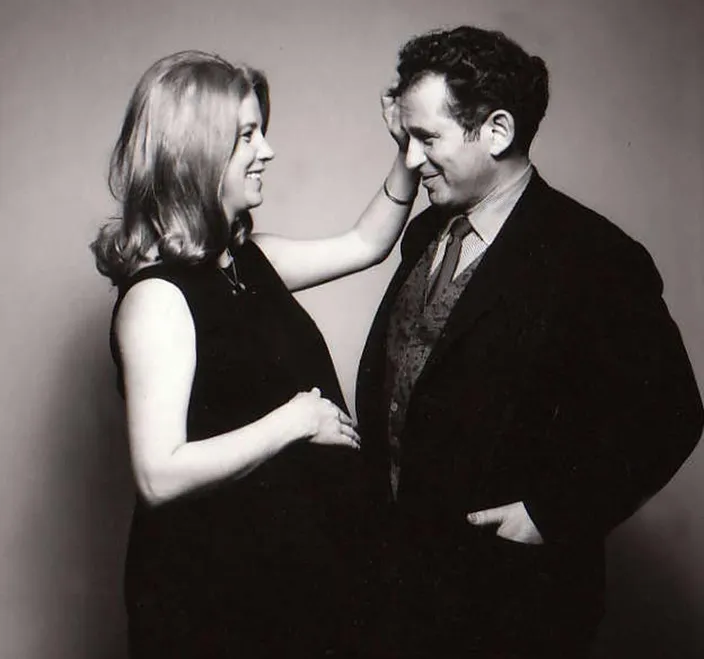
The An American Dream serialization year. Mailer publishes the novel in eight monthly installments in Esquire from January through August — completing each chapter six weeks before it appears — and then revises the Esquire text substantially for the Dial Press book edition. His first son, Michael Burks Mailer, is born to Beverly Bentley on 17 March. In late January Mailer debates William F. Buckley Jr. on David Susskind's Open End; in February he is in the Miami audience when Muhammad Ali defeats Sonny Liston for the heavyweight championship; in mid-July he covers the Republican Convention in San Francisco for Esquire (the resulting essay 'In the Red Light' appears in the November issue); in October the Voice prints Mailer's endorsement of Bobby Kennedy for U.S. Senate; in November Book Week prints his review of LBJ's My Hope for America two days before the 3 November Johnson landslide; in December he completes a second revision of An American Dream on the Dial Press galleys. The Marcus Paris Review 'Art of Fiction XXXII' interview — conducted at 142 Columbia Heights on 6 July 1963 — appears in the Winter-Spring 1964 issue; Mailer's Special Preface to the Bantam paperback of The Presidential Papers responds to the JFK assassination.
January — AAD serial launches; Marcus Paris Review interview; Open End debate
January — Esquire publishes the first installment of An American Dream (64.2) — Mailer’s eight-part Esquire serial, announced in the December 1963 Big Bite (63.13). The installment title — “The Harbors of the Moon” — is drawn from a poem about Provincetown in Deaths for the Ladies (62.3).
Winter–Spring 1964 (publication date on the issue masthead, the actual publication probably in February) — The Paris Review no. 31 publishes Steven Marcus’s “Art of Fiction XXXII” omnibus interview with Mailer (64.1), conducted at 142 Columbia Heights on 6 July 1963. Per Lennon, “one of Mailer’s most important” interviews.
Late January — Mailer debates William F. Buckley Jr. in New York on David Susskind’s Open End television program (per the An American Dream Expanded Timeline). The 3 February New York Times prints a brief account (64.10a): Buckley, the apparent winner, told Mailer, “You are a magnetic field in this country.”
February — AAD II; Liston–Clay (Ali)
February — Esquire publishes installment II of An American Dream (64.3), retitled “A Runner from the Gaming Room” for the Dial Press book edition.
11 February — Mailer completes the fifth installment of AAD (per AAD Expanded Timeline).
25 February — In Miami, Muhammad Ali (then Cassius Clay) defeats Sonny Liston for the heavyweight championship. Mailer is in the audience. The Ali–Liston fights bracket Mailer’s 1963 Esquire essay “Ten Thousand Words a Minute” (63.3) and his later boxing writing on Ali through the 1970s.
March — AAD III; Michael Burks Mailer
March — Esquire: installment III (64.4). Per the AAD Expanded Timeline, Mailer began work on this installment on 27 November 1963 — five days after the Kennedy assassination.
17 March — Beverly Bentley gives birth to Michael Burks Mailer — Mailer’s first son after four daughters (Susan, Danielle, Elizabeth, Kate). Per AAD Expanded Timeline: Mailer completes installment VI (64.7) at about the same time.
24 March — Harvard Crimson prints — wait, that’s 1963 (63.26). No 24 March 1964 Harvard event recorded.
April — AAD IV; FBI essay-contest winners; Scully debate; Killer; Conversation with Mailer; Reading from Left to Right not — wait 63.27.
April — Esquire: installment IV of AAD (64.5), reprinted in the Dial Press Dial Souvenir Sampler later in the year as a teaser for the forthcoming book. Esquire also prints Mailer’s untitled “Backstage with Esquire” announcement (64.11) of the five winners of his essay contest on “Why I am not now and never have been a member of the Federal Bureau of Investigation” (the contest had been announced in his September 1963 Big Bite column 63.10).
Architectural Forum prints “Mailer vs. Scully” (64.10), the three-part debate with Yale architectural historian Vincent J. Scully Jr. on modern architecture. Scully’s response appears almost simultaneously in the Village Voice on 16 April.
Evergreen Review no. 32 (April–May) prints Mailer’s short story “The Killer” (64.12).
26 April — Observer Weekly (London) prints Gavin Young’s interview with Mailer (64.13), conducted in the midst of the AAD serial.
May — AAD V; Cleft poems; Special Preface to Bantam edition; Warner Brothers option
May — Esquire: installment V of AAD (64.6); Esquire editors’ summary concludes with “The Dial Press will publish An American Dream in August” — a publication date that would slip to 15 March 1965.
Cleft (Edinburgh) Vol. 2, May: two Mailer poems (64.14).
Bantam Books publishes the paperback edition of The Presidential Papers with Mailer’s “Special Preface to the Bantam Edition” (64.15) — the post-Kennedy-assassination preface foreshadowed by the December 1963 NYRB tribute (63.38). The jacket photograph — Mailer in the JFK-style rocking chair — is altered to remove the rockers for the paperback cover. The same preface appears in the late-April / early-May British edition of Presidential Papers (André Deutsch).
Late May — Warner Brothers buys an option on the film rights to An American Dream (per AAD Expanded Timeline). The option becomes a full purchase on 27 January 1965 for $200,000.
June — AAD VI; Architects: Blindness Voice essay; AAD final installment
Early June — The final long installment of An American Dream is completed (per AAD Expanded Timeline). The Mailers go to Provincetown where Mailer will revise the Esquire version for book publication.
June — Esquire: installment VI of AAD (64.7).
18 June — Village Voice prints “Architects: Blindness Is the Fruit of Your Design” (64.16) — part three of the Scully debate, slightly revised. The Voice editors offered Scully the last word; Scully replied: “I feel that I have had the last word already.”
July — AAD VII; Gargoyle pamphlet; Republican Convention coverage
July — Esquire: installment VII of AAD (64.8). Dublin’s Dolmen Press publishes the limited-edition pamphlet of the Scully-rebuttal essay (64.17, 100 copies).
2 July — President Johnson signs the Civil Rights Act of 1964.
Mid-July (13–16 July 1964) — Mailer breaks off AAD revision to cover the 1964 Republican National Convention at the Cow Palace in San Francisco (Barry Goldwater‘s nomination over Rockefeller). His resulting essay “In the Red Light” (64.20) will appear in the November Esquire.
August — AAD VIII (serial finale); Tonkin Gulf Resolution
August — Esquire: installment VIII of AAD (64.9), the final installment. Esquire editors: “This concludes An American Dream. Dial Press will publish it in hardcover form this fall.” In the novel’s final Dial Press version, the concluding portion of 64.9 will be broken off as “Epilogue: The Harbors of the Moon Again,” closing the novel with the same title that opened it in 64.2.
7 August — Congress passes the Tonkin Gulf Resolution, authorizing escalating U.S. military involvement in Vietnam.
September — Executioner’s Song; Free Speech Movement
September — Mailer’s poem “The Executioner’s Song” (64.18) appears in Ed Sanders‘s Fuck You/A Magazine of the Arts no. 5, alongside Ginsberg, Creeley, Burroughs, Olson, McClure, Snyder, and others. The poem’s title gives Mailer the title of chapter 15 of The Fight (1975) and of The Executioner’s Song (1979).
September — The Free Speech Movement begins at the University of California at Berkeley.
October — Bobby K. endorsement; AAD Publishers Weekly ad
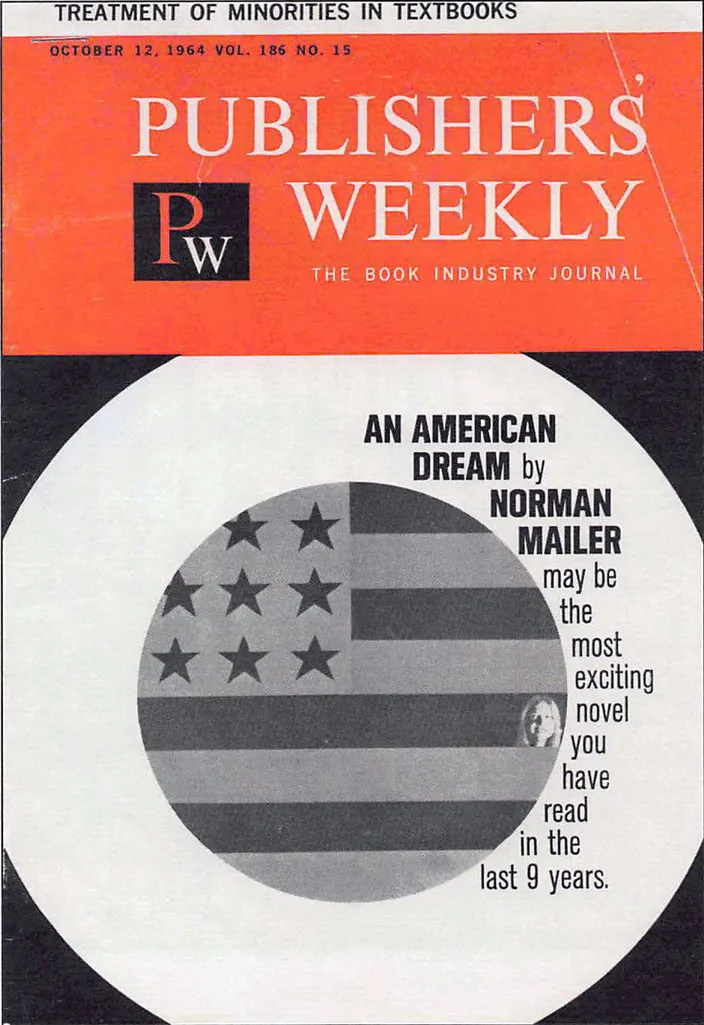
12 October — An advertisement for An American Dream in book form appears in Publishers’ Weekly, giving a January 1965 publication date (the actual publication will be 15 March 1965).
29 October — Village Voice prints “A Vote for Bobby K. — Possibility of a Hero” (64.19) — Mailer’s endorsement of Robert F. Kennedy in the New York U.S. Senate race.
November — In the Red Light; Best Man review; Johnson landslide
November — Esquire prints “In the Red Light: A History of the Republican Convention in 1964” (64.20) — Mailer’s long nonfiction-narrative on the Goldwater nomination, the precursor to Miami and the Siege of Chicago (1968).
1 November — Book Week (NYHT) prints Mailer’s review of LBJ’s My Hope for America: “The Best Man, 1964” (64.21).
3 November — Johnson elected President in a 61.1% landslide over Goldwater. Robert F. Kennedy elected to the U.S. Senate from New York.
December — Second revision of AAD; Talking of Violence
20 December — Working on the Dial Press galleys, Mailer completes a second revision of An American Dream (per AAD Expanded Timeline).
Winter 1964–65 — Twentieth Century (London) prints W. J. Weatherby’s interview (64.22) with Mailer on violence.
Also published in 1964
Mailer’s letter to Pierre Brodin (64.23) appears in Brodin’s Présences Contemporaines Écrivains Américains D’Aujourd’hui (Paris: Les Nouvelles Éditions Debresse) — Mailer’s brief account of his French literary influences, naming Stendhal, Proust, Malraux, and his old friend Jean Malaquais as the largest single personal influence on his intellectual life.
Mailer opens 1964 still inside the serial: two January letters in the Letters on An American Dream collection — to the novelists Don Carpenter (15 January) and Vance Bourjaily (16 January) — describe the Esquire installments as “ten-second chess” and quote Freud’s rule, “Piss in one spot.”
Related pages
- 1963 | 1965
- An American Dream: A New Novel Serialized Exclusively in Esquire by Norman Mailer; Installment One: The Harbors of the Moon | Installment VIII: At the Lion and the Serpent | Norman Mailer: The Art of Fiction XXXII | In the Red Light: A History of the Republican Convention in 1964 | The Executioner's Song | Mailer vs. Scully
- Beverly Bentley | Michael Burks Mailer | Scott Meredith | Dial Press | E. L. Doctorow | Steven Marcus | Vincent Scully | Ed Sanders | Harold Hayes | Anne Morse Barry | Norman Mailer's Letters on An American Dream, 1963–1969
- The "Big Bite" (63.13) | Deaths for the Ladies (and Other Disasters) (62.3) | Mailer and Buckley Talk on 'Open End' (64.10a) | Installment Two: A Messenger from the Casino (64.3) | Ten Thousand Words a Minute (63.3) | Installment Three: A Messenger from the Maniac (64.4) | Installment Six: A Vision in the Desert (64.7) | Norman Mailer Returns to Read, Philosophize on Existential Life (63.26) | Installment Four: Green Circles of Exhaustion (64.5) | Untitled announcement (64.11) | The "Big Bite" (63.10) | The Killer (64.12) | A Conversation with Mailer (64.13) | Installment Five: A Catenary of Manners (64.6) | Greasing the Radar; A Study of Cancer in English Grammar (64.14) | Special Preface to the Bantam Edition (64.15) | The Fate of the Union: Kennedy and After (63.38) | Architects: Blindness Is the Fruit of Your Design (64.16) | Installment Seven: A Votive is Prepared (64.8) | Gargoyle, Guignol, False Closet (64.17) | A Vote for Bobby K. — Possibility of a Hero (64.19) | The Best Man, 1964: To Pick Him, We Must Choose between Nostalgic Extremism and Overwhelming Moderation (64.21) | A Farewell to His Honor (61.1) | Talking of Violence (64.22) | Letter to Pierre Brodin (64.23)
Referenced by 34
Works
- A Conversation with Mailer
- A Vote for Bobby K. — Possibility of a Hero
- An American Dream: A New Novel Serialized Exclusively in Esquire by Norman Mailer; Installment One: The Harbors of the Moon
- Architects: Blindness Is the Fruit of Your Design
- Gargoyle, Guignol, False Closet
- Greasing the Radar; A Study of Cancer in English Grammar
- In the Red Light: A History of the Republican Convention in 1964
- Installment Five: A Catenary of Manners
- Installment Four: Green Circles of Exhaustion
- Installment Seven: A Votive is Prepared
- Installment Six: A Vision in the Desert
- Installment Three: A Messenger from the Maniac
- Installment Two: A Messenger from the Casino
- Installment VIII: At the Lion and the Serpent
- Mailer and Buckley Talk on 'Open End'
- Mailer vs. Scully
- Norman Mailer: The Art of Fiction XXXII
- Special Preface to the Bantam Edition
- Talking of Violence
- The Best Man, 1964: To Pick Him, We Must Choose between Nostalgic Extremism and Overwhelming Moderation
- The Executioner's Song
- The Killer
- Untitled announcement